
Gaffel-Kölsch: Traditional beer, brewed innovatively
Consistently high steam quality and efficiency
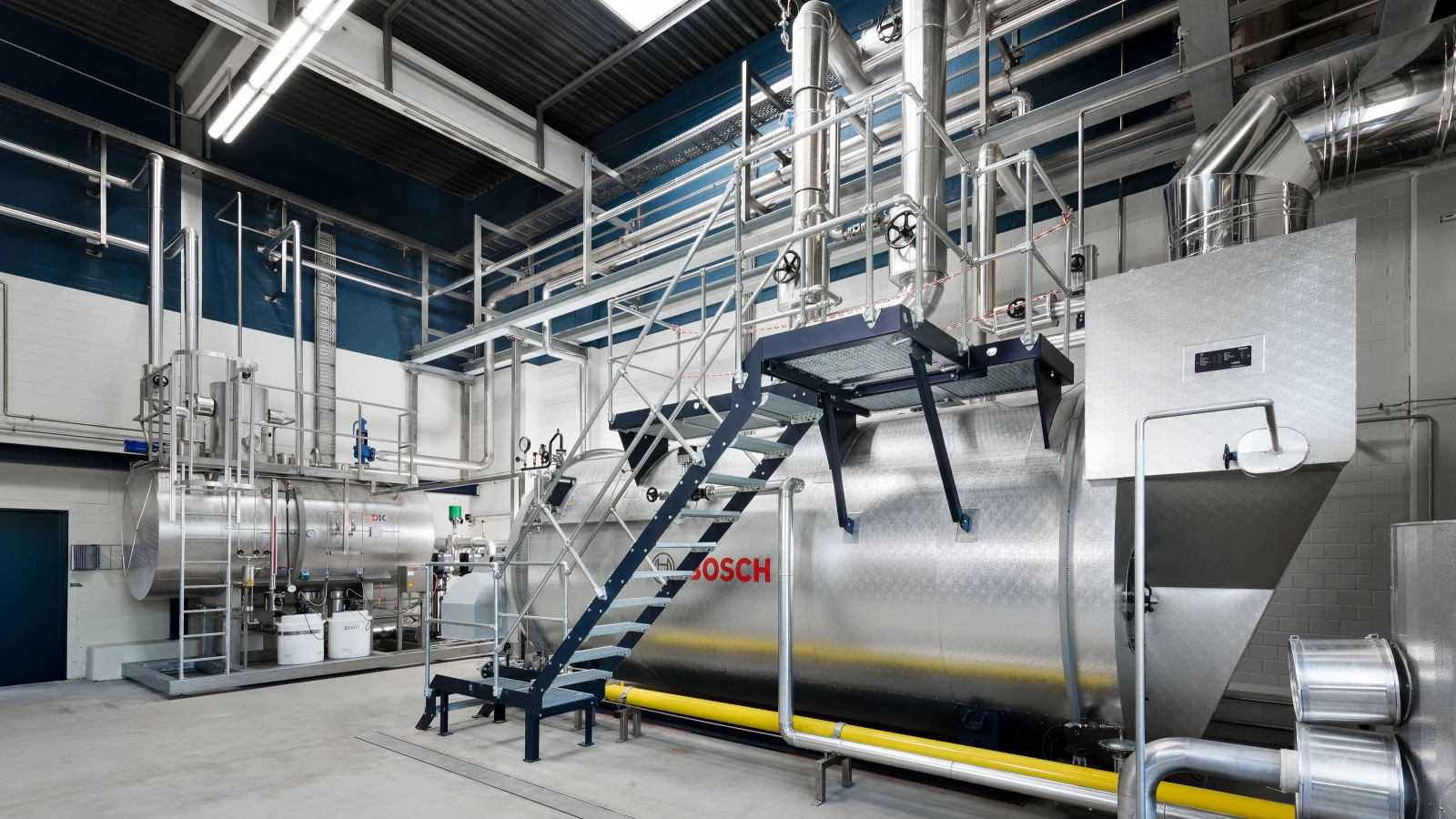
The operator
The privately owned brewery Gaffel Becker & Co. OHG can look back on a long tradition of brewing: The first beer by Gaffel was drawn in 1908. In the 1920's Gaffel at its location in Eigelstein was one of the largest breweries in Cologne. Until today the brewery is family-owned and has set high standards with its traditional Kölsch beer. Together with new innovations, such as refreshing soft drinks and fruity beers (Sonnen Hopfen), the brewery produces on average about four million litres a month - trend increasing. The move from the brewery's location Eigelstein, in Cologne's centre, to the South-Eastern part of town, Porz-Gremberghoven, provides much more effective production conditions and is also a better location in terms of logistics. Highly modern brewing plants and a new Bosch steam boiler plant ensure that the proven beer quality can be produced at low energy costs.
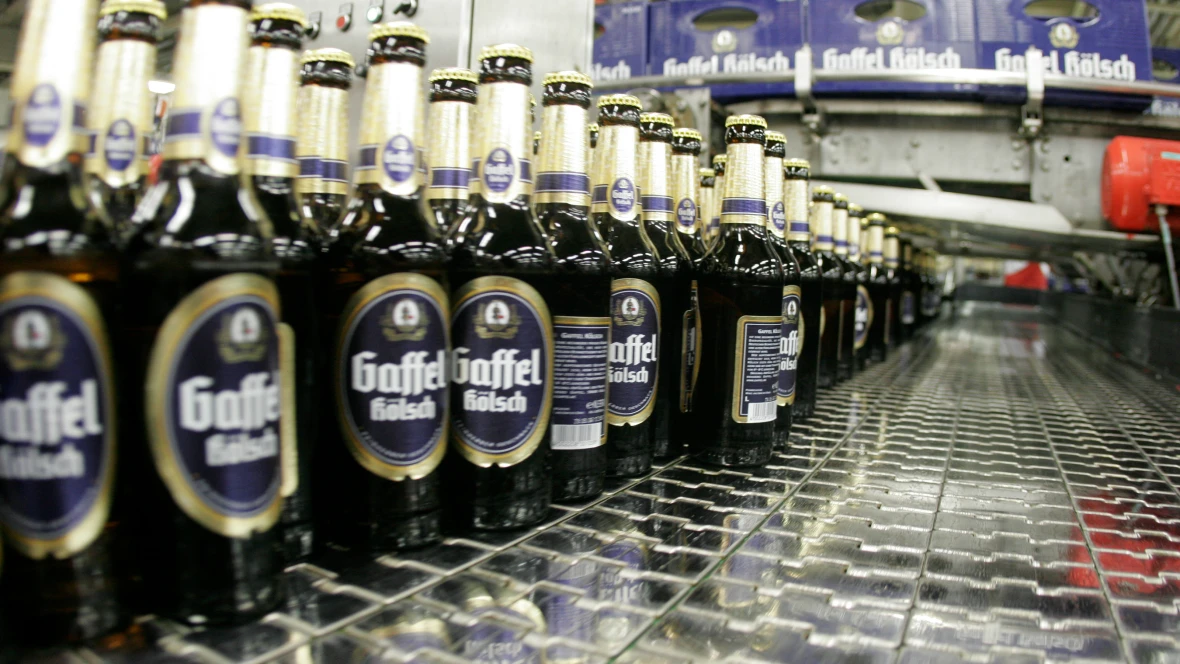
Kölsch is a kind of beer with a protected geographical designation of origin. Only breweries in Cologne and of the Cologne brewery association may produce this beer speciality - thus it is stipulated in the officially approved Kölsch convention from 1986.
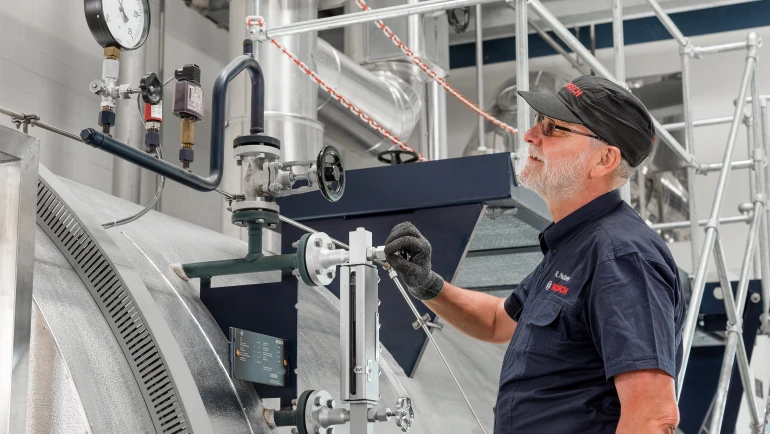
Bosch industrial service carried out the commissioning of the steam boiler plant and accompanied the approval by authorities.
The project
The new boiler house at the brewing location Porz has been implemented by the plant engineering company Dankl Dampfsysteme from Freilassing, Bavaria. The task comprised the planning und installation of the entire steam supply based on the customer-specific process requirements. Bosch Industriekessel GmbH supported Dankl Dampfsysteme in all stages of the project. The main factors were achieving a flexible operating behaviour and constant efficiency. Not only in the technical range, but also in design Bosch showed flexibility. Instead of the common red-grey combination, the boiler is designed in Gaffel's corporate colour dark blue. The control cabinets are in stainless steel, just as required by the customer.
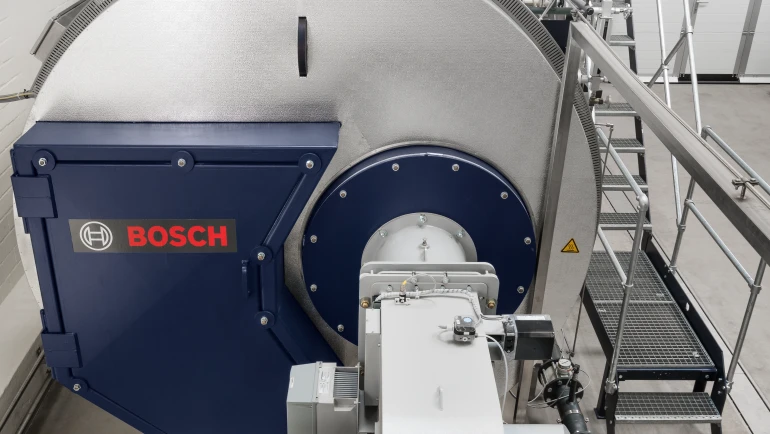
Continuously high steam quality and constant efficiency – even at large load fluctuations.
Dynamic boiler operation
The selected Bosch boiler type UL-S can provide up to 8 000 kg steam per hour for the high process heat requirements in the brewhouse. And there are also further energy consumers, such as CIP plants for cleaning and the dealcoholisation plant. The industrial boiler is designed for the sudden load changes of the steam consumers, typical for a brewery. Due to the large control ratio of 1:10, the plant operates flexibly and efficiently at every operating point. The modern natural gas burner from Dreizler adapts its burner output continuously to the actual steam demand and also covers low loads very efficiently. Consequently, the frequency of the burner switching on and off is highly reduced. The resulting energy losses caused by preventilation of the flue gas channels at every burner start are reduced and the service life of burner and boiler are increased.
Another advantage is the speed controlled burner fan. It saves electricity thanks to a reduction of the fan speed depending on the actual burner output. This results in a considerably lower electricity consumption at partial load. In addition, the noise in the boiler house is significantly reduced and fan and burner components are under less mechanical stress.
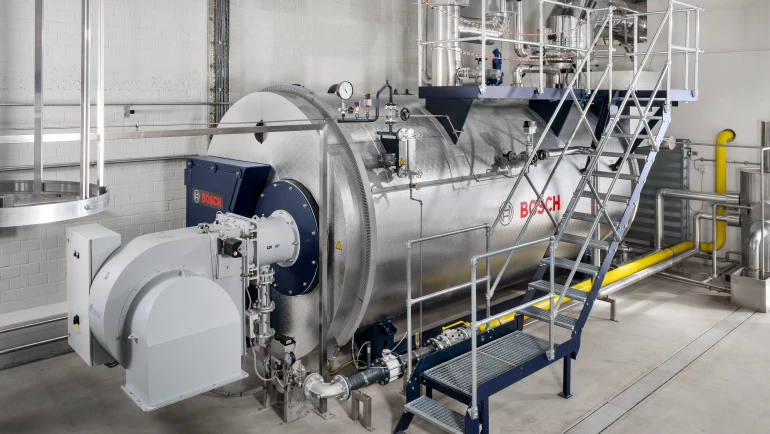
Brewing beer is an energy-intensive process. Most of the heat consumption is generated in the brewhouse, mainly for mashing and cooking. Modern energy supply systems help to reduce operating costs and emissions.
Energy-efficient and low-emission operation
High efficiency is a very important aspect in the energy-intensive brewing process. Already at the Bosch factory, the steam boiler is equipped with an economizer. This heat exchanger uses the residual heat of the hot flue gas for preheating feed water to about 145 °C. Thus the internal steam demand of the plant and the fuel consumption during steam generation are reduced. Another positive effect: The flue gas temperature is decreased by about 100 Kelvin. The boiler achieves an energy efficiency of around 96%.
In order to keep emissions low, the natural gas burner has an internal flue gas recirculation. Part of the flue gas is returned from the combustion chamber to the burner mixing device. This reduces peak temperatures in the flame and thus considerably reduces the thermal formation of nitric oxide: The NOx emissions are only at about 60 mg/kWh at most operating points and stay even at full load below 80 mg/kWh. For an optimum gas/air mixture, an O2 control is integrated in the plant. An oxygen probe measures the oxygen content continuously and compensates changes in air temperature, air pressure and gas quality automatically. This optimises the efficiency of the burner system and reduces the environmental impact at the same time.
Continuously automated and reliable
Comfort and safety are provided by the high degree of automation of the steam boiler plant. The boiler control BCO includes the intelligent automatic function SUC (start-up control). For example after the weekend, the boiler attendant can simply start the plant from the cold state by pushing a button, instead of carrying out the complex starting procedure manually. The SUC monitors and controls all relevant starting processes such as for example the stepwise opening of the steam discharge valve. Integrated protective functions ensure a smooth heat maintenance and normal operation. In addition, the PLC based control records and saves all important operating data. With the integrated software Condition Monitoring, this data can be displayed and evaluated efficiently. Consequently, the operating personnel at the Gaffel brewery and the responsible Bosch service technician can react immediately, e.g. in case of too high desalting rates or unwanted condensation.
Automatic measuring and control equipment provides further operating comfort. These comprise the continuous conductivity measurement, desalting and blow-down devices and the continuous feed water control. These components are controlled via the BCO. Make-up water and condensate monitoring devices are also part of the plant equipment. In case of contamination, make-up water and condensate are automatically and reliably drained off without interrupting boiler operation. Also the feed water deaeration is completely automated. Before fresh water such as dissolved carbon dioxide and oxygen have to be removed. For this purpose, water is being heated to 103 °C. An automatic chemical dosing binds residual hardness and oxygen as needed. Consequently the amount of used chemicals can be reduced.
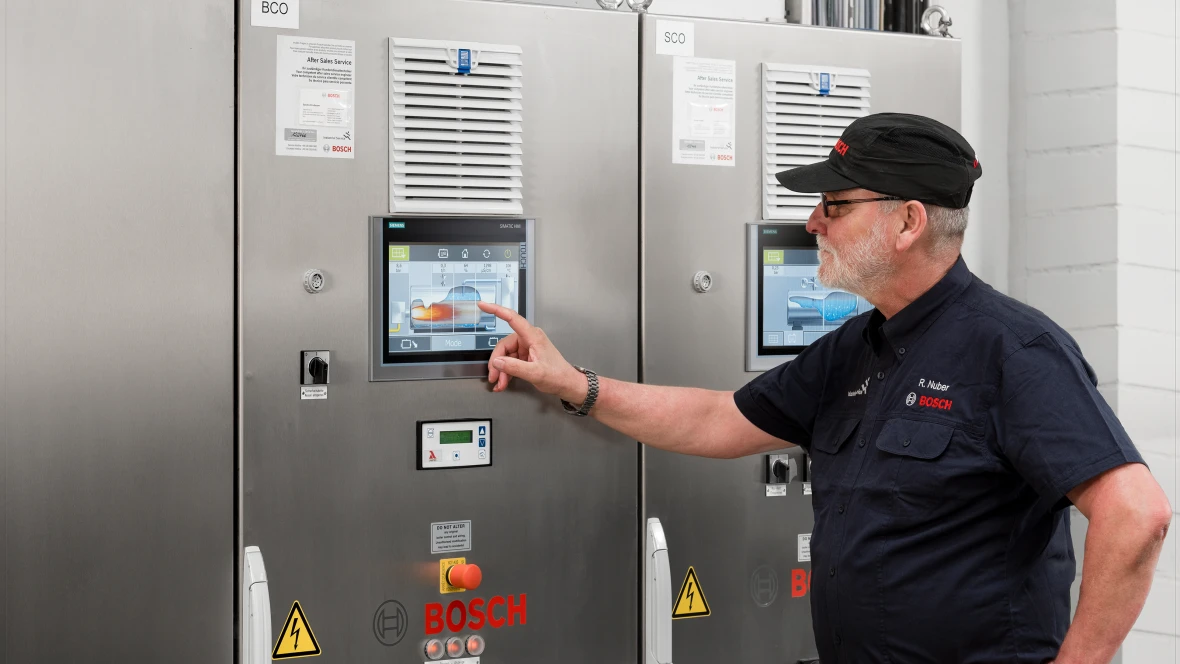
Main functions of the boiler control BCO:
Intelligent data recording Condition monitoring
Automatic desalting and blow-down
Evaluation of the burner start frequency
Main functions system control SCO:
Connection to higher-level control system
Control of the deaeration, chemical dosing, fuel safety lock, blow-down cooling, condensate and make-up water control
The result
With the more efficient Bosch boiler system and the improved production conditions in the brewery, the steam consumption could be reduced by almost 50%. The intelligent data recording and analysis keeping energy costs constantly low. In addition, the Gaffel brewery benefits from a dynamic and reliable boiler operation. The proven boiler construction UL-S together with the appropriate plant equipment and burner technology ensure a continuously high steam quality for the brewing process. Regular maintenance service by the Bosch Customer Service ensures optimum plant settings, a constantly high efficiency and a longer service life of the entire plant.