
NOx levels below 20 mg
Low-emission heating system in Hanover's second largest residential complex
The Tollenbrink area in Bothfeld, constructed in 1972, is the second largest residential area in Hanover (Germany) with its 482 residential units. With a new Bosch boiler system, the 1,200 residents benefit from not only a reliable and cost-efficient heating and hot water supply, but most especially, from better air quality. The system's nitrogen dioxide emissions are so low that they are significantly below the legal threshold.
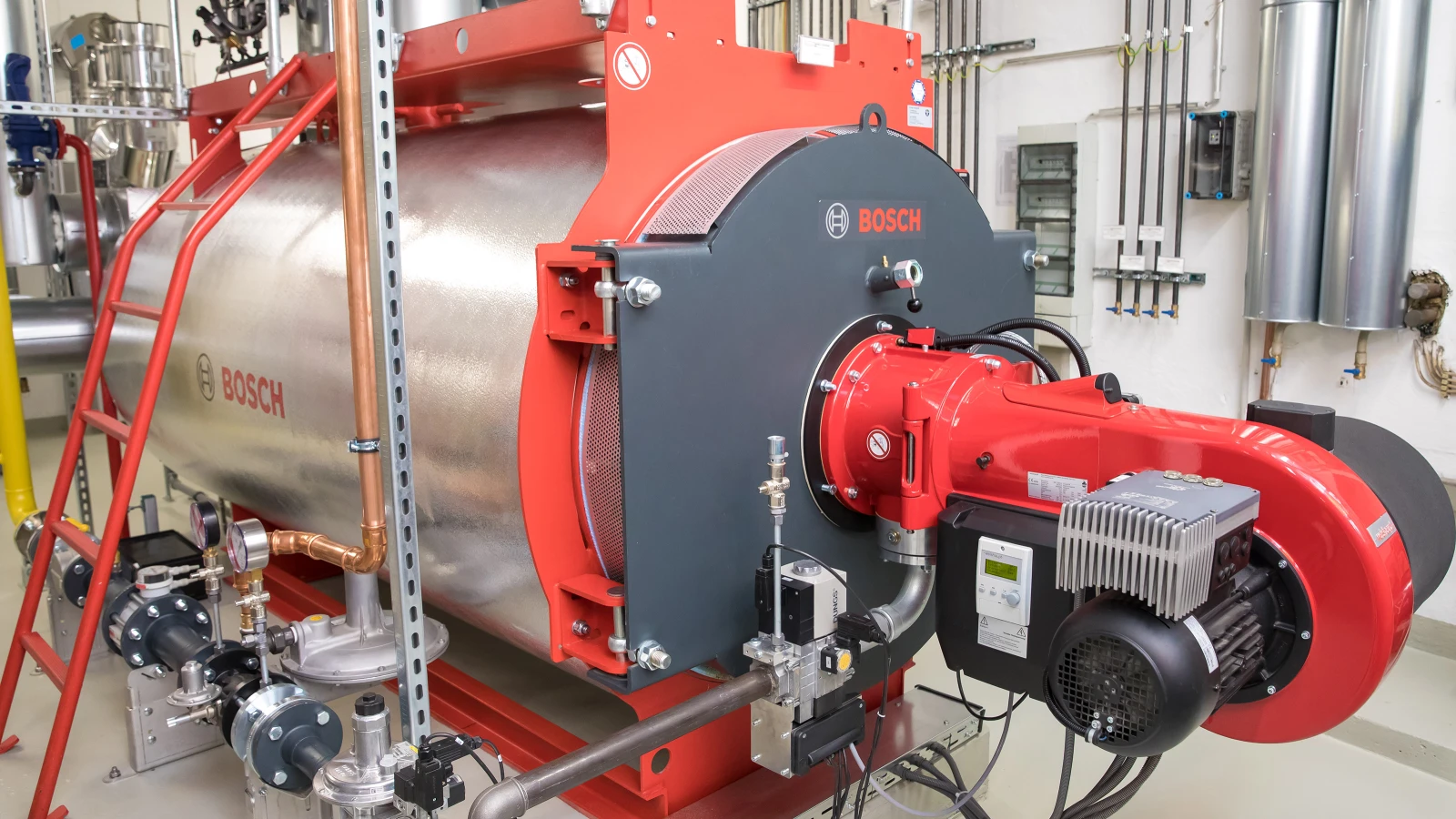
Committed to a clean environment
The boiler system comprises two compact UT-L boilers with a heat output of 1,300 kilowatts each. The most unique thing about it: It produces a maximum of 20 mg/m³ nitrogen dioxide emissions. That is much lower than the upcoming new threshold value of 100 mg/m³ in Germany. The boilers are powered by a new burner generation made by a German manufacturer. These gas-powered surface burners are the first of their kind in Germany and, in combination with the Bosch boilers and thanks to the geometry of their combustion chambers, they achieve these pioneering values. The combustion temperature is 1,200 degrees, which minimises the formation of thermal nitrogen dioxide. In comparison, conventional appliances have a combustion temperature of several hundred degrees higher. "We're intentionally ahead of future legislation and have planned and engineered a boiler system that will endure for the coming decades," explains Sven Koss of the executive planning office, Koss Ingenieure. The high modulation range of 1:10 (260 to 2,600 kilowatts) also enables a long burner runtime. The boiler system is able to adapt to the changing heat energy demand without constantly having to power on and off, which would cause increased energy consumption.
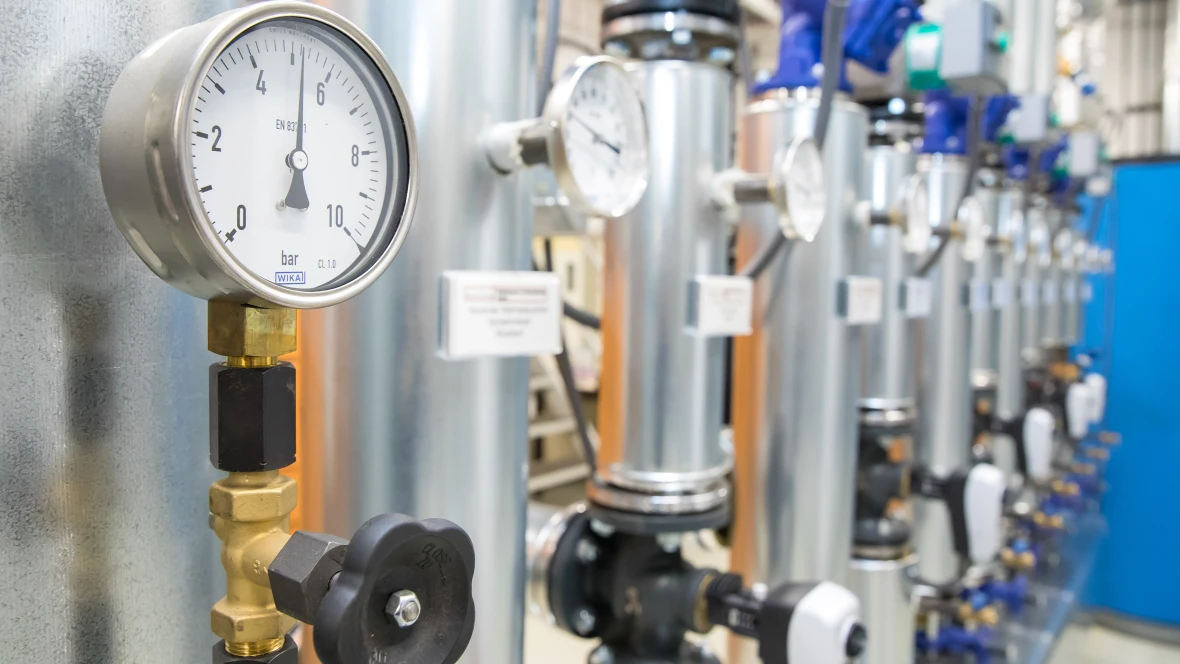
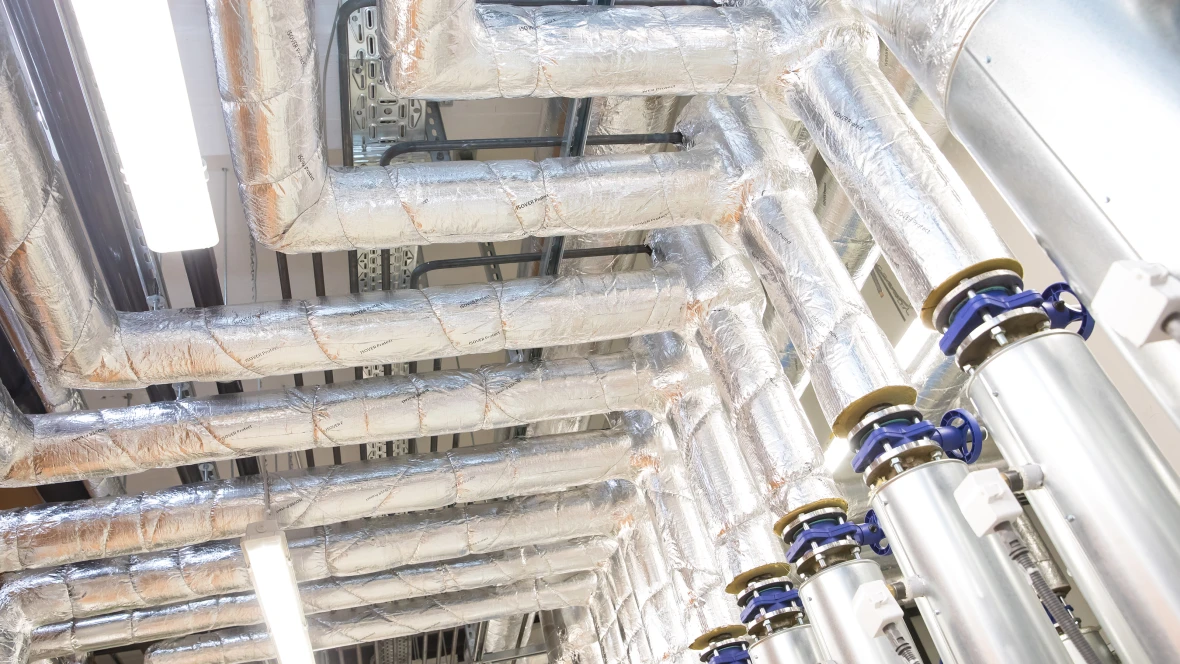
The development and implementation of new ideas is essential to meet the goals for resource conservation and environmental protection in Germany and the rest of Europe. One of the biggest means of leverage is the reduction of emissions in the heating sector. The provision of room heating is responsible for around two thirds of the greenhouse emissions in the building sector.* Outdated heating technology and the harmful emissions released into the atmosphere by such technology have negative effects on the environment. Technological advancements can lead to significant energy savings and the new boiler system at Tollenbrink is an example of this. As well as producing low emissions, the system is also especially efficient and cost-effective. The proven boiler design and the high-quality insulation, together with the integrated flue gas heat exchangers, achieve an efficiency of close to 100 percent, which has a positive effect on both the energy consumption and the emissions. A pioneer for an environmentally friendly future.
*Source: Federal Ministry for the Environment, Nature Conservation and Nuclear Safety
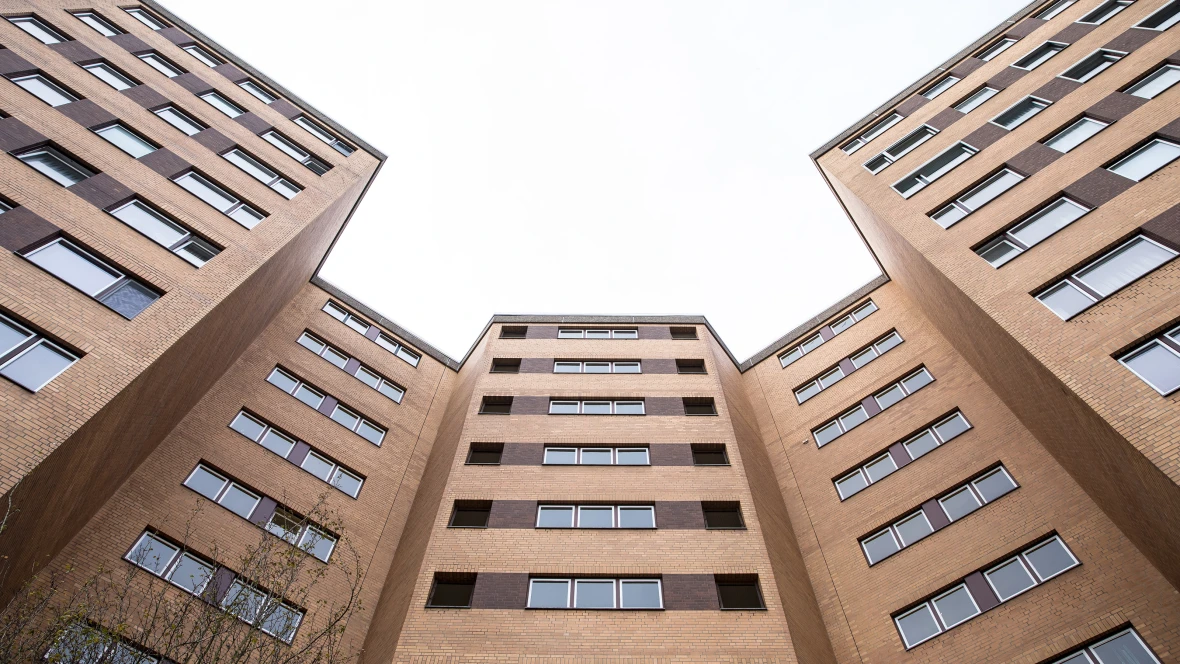
Tollenbrink housing