
Environmentally friendly feed water heating
Fixkraft combines steam boiler with solar thermal heat
The operator
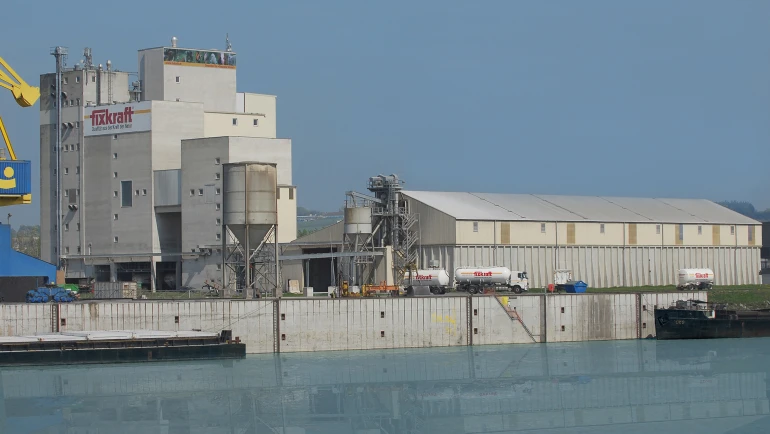
Founded in 1971, Fixkraft Futtermittel GmbH, which has its headquarters in the Danube port town of Enns in Austria, produces high-quality animal feed for all types of livestock. The company's portfolio comprises approximately 420 specially developed feed mixes structured in various ways, ranging from mealy feed to pellets and feed in the form of muesli. With about 80 employees and an annual production output of around 180,000 tons, Fixkraft is the largest privately owned manufacturer of compound feed in Austria.
The project
As a result of an increase in production capacity, in 2012, Fixkraft decided to restructure its energy supply. Alongside reliable and cost-effective steam provision, an important criterion of the feed manufacturer was the use of alternative energies. Finally, a system concept combining conventional and renewable energies from plant construction company Ing. Aigner Wasser - Wärme - Umwelt GmbH in Neuhofen/Krems, Austria was selected.
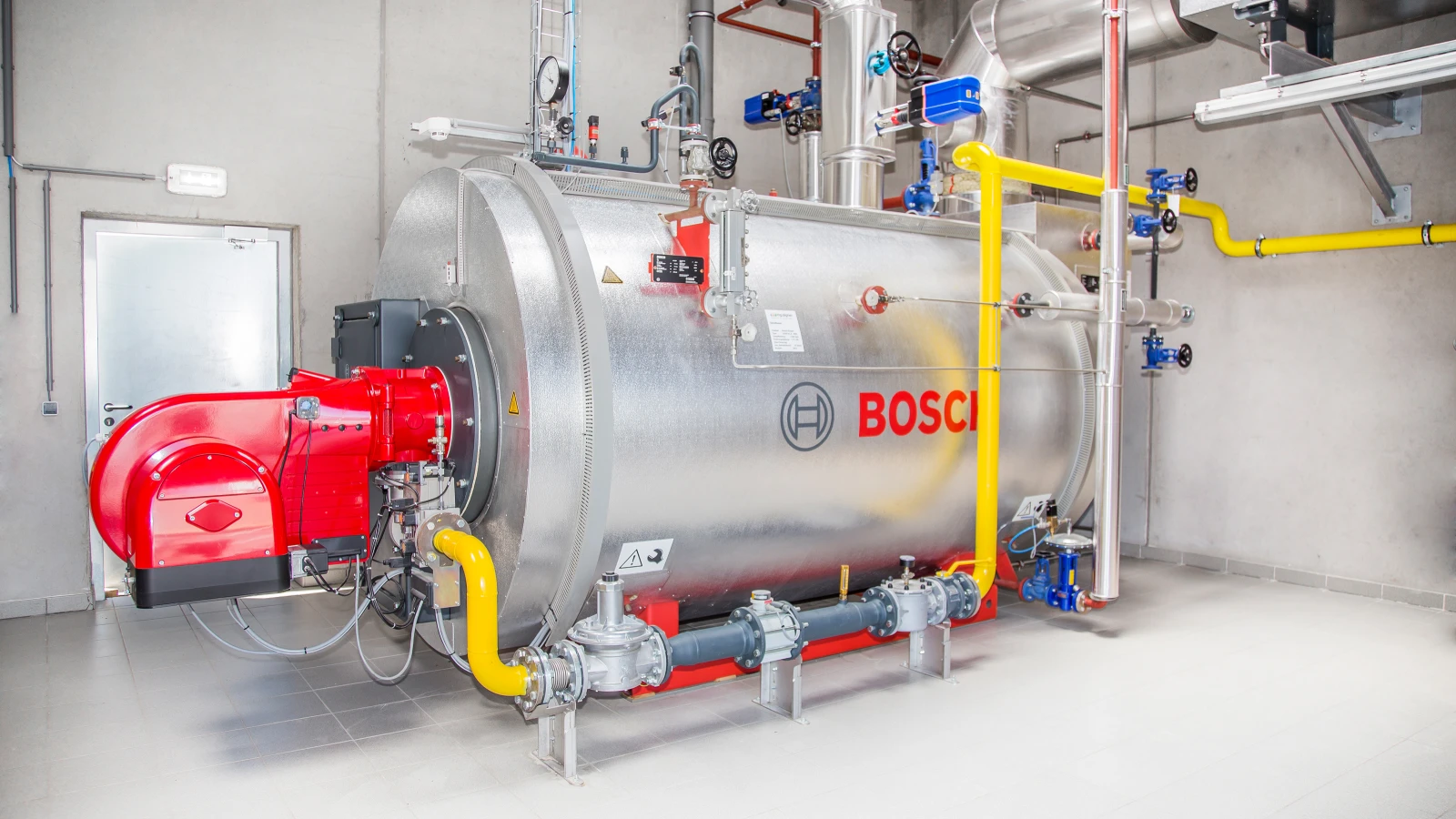
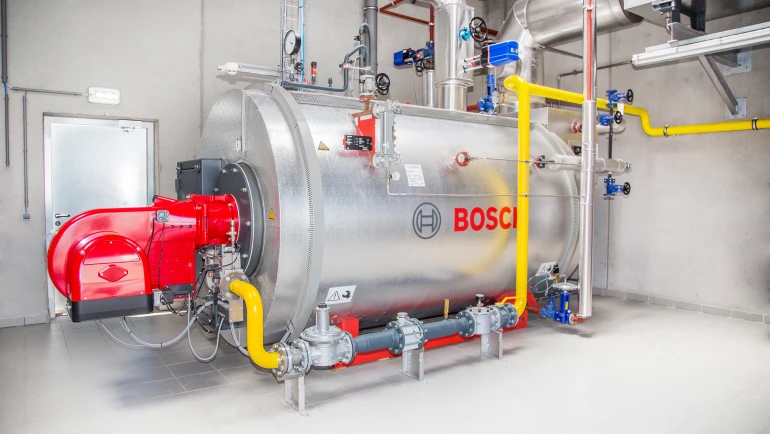
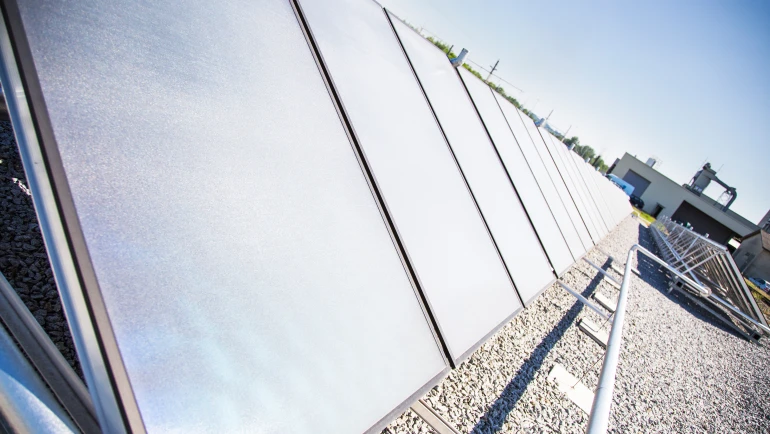
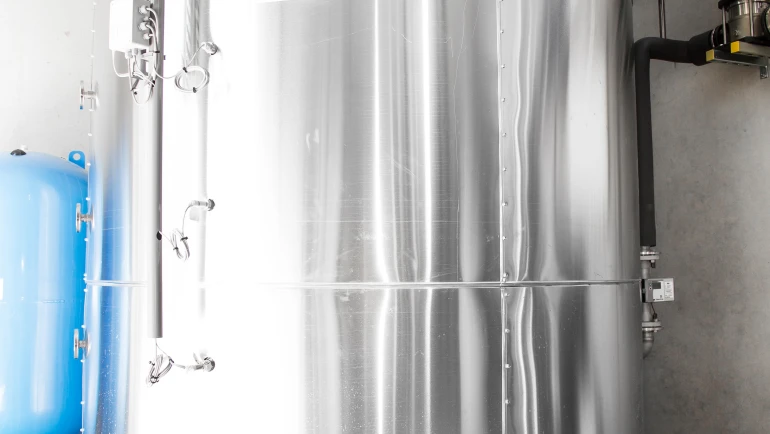
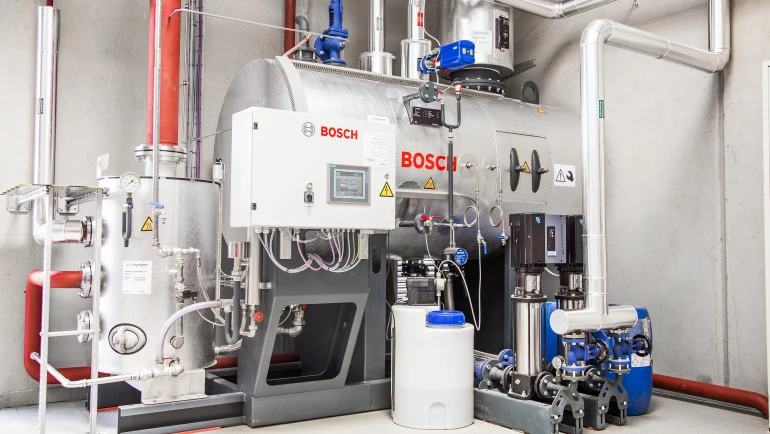
A steam boiler type UL-S from Bosch Industriekessel with an output of 2,500 kg of steam per hour, combined with a solar thermal system, provides the process heat required to manufacture the animal feed. Production runs 24/7 all year round. The saturated steam is introduced directly into the product, meaning that the amount of returning condensate is very low and the demand for fresh water correspondingly high. The low temperature level of the fresh water requires therefore an efficient heating process in order to keep the plant’s internal energy consumption as low as possible. A solar system with an installed collector area of 320 m² is used to help preheat the water.
Insights into our technology
Take a look behind the scenes. In this video, we show you our high-quality industrial boilers and system components up close.
Firing system
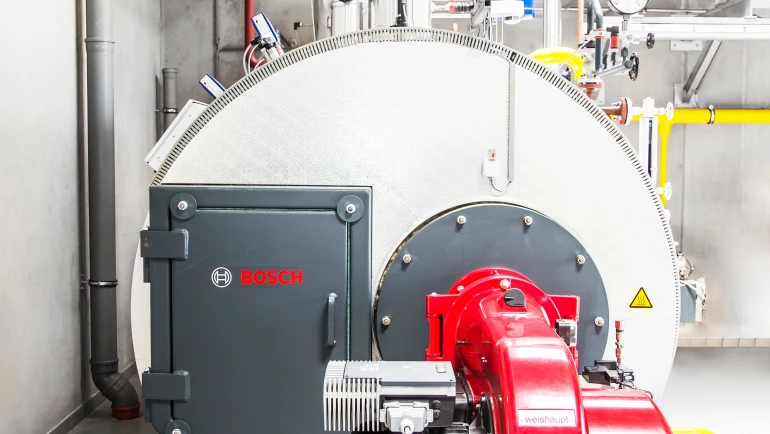
The steam boiler is fitted with a modern modulating gas burner and a speed-controlled fan for reducing electricity consumption. The fan speed can be flexibly adapted to the actual burner load, whereas in conventional burners the combustion air fan runs at full speed even in the low output range. In addition to saving electrical energy in the partial load range, the noise emission also decreases significantly.
Integrated oxygen regulation monitors and optimises the combustion process. It continually measures the oxygen content in the flue gas and controls the air supply accordingly. Compared with conventional systems, increased excess air can be avoided – resulting in higher efficiency of the plant and reduced emissions.
Control system
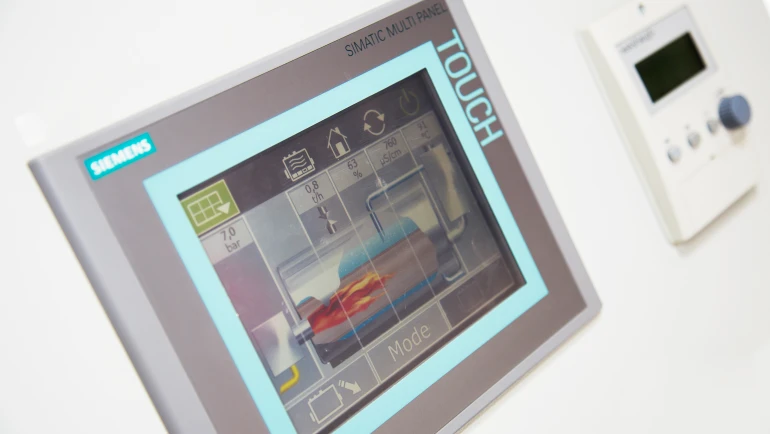
Modern touchscreen controls optimise the operation of the boiler and the plant. All operating data (fuel consumption, steam quantity, pressure history and the number of times the burner is switched on and off, for example) is saved and displayed via the control systems. Further, they are equipped with integrated monitoring and protective functions to prevent incorrect operation. A remote service connection is also available, allowing the Bosch service engineers to access, analyse and optimise the operating data remotely.
Implementation phases of the modernisation measures
- Building of a new boiler house
- Installation of a solar thermal system on the company site
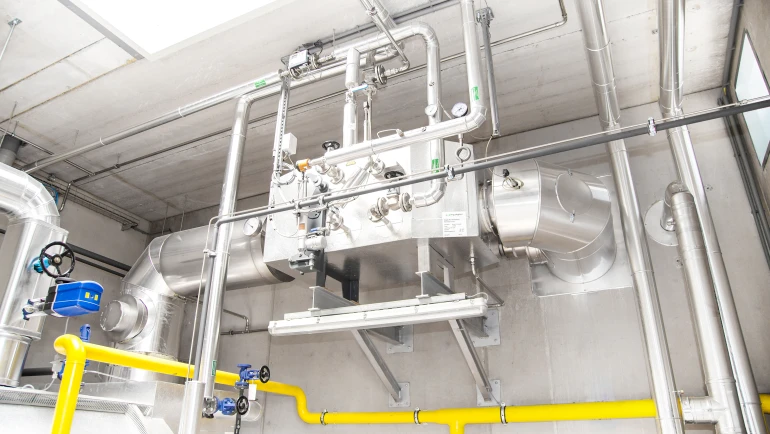
- Integration of a modern steam boiler with integrated economizer
- Use of oxygen-regulated and speed-controlled firing
- Installation of a downstream condensing heat exchanger
- Installation of a water treatment plant
- Integration of programmable controls with remote service function
The result
Compared with the old plant, Fixkraft is achieving an energy saving of around 15 % with the combination of a steam boiler plant and a solar thermal system. The environment also profits through 85 tons less CO2 emissions per year. The use of solar energy and process-related waste heat has resulted in a solution for heating feed water that is both cost-effective and environmentally-friendly. Energy consumption is reduced and efficiency increased.
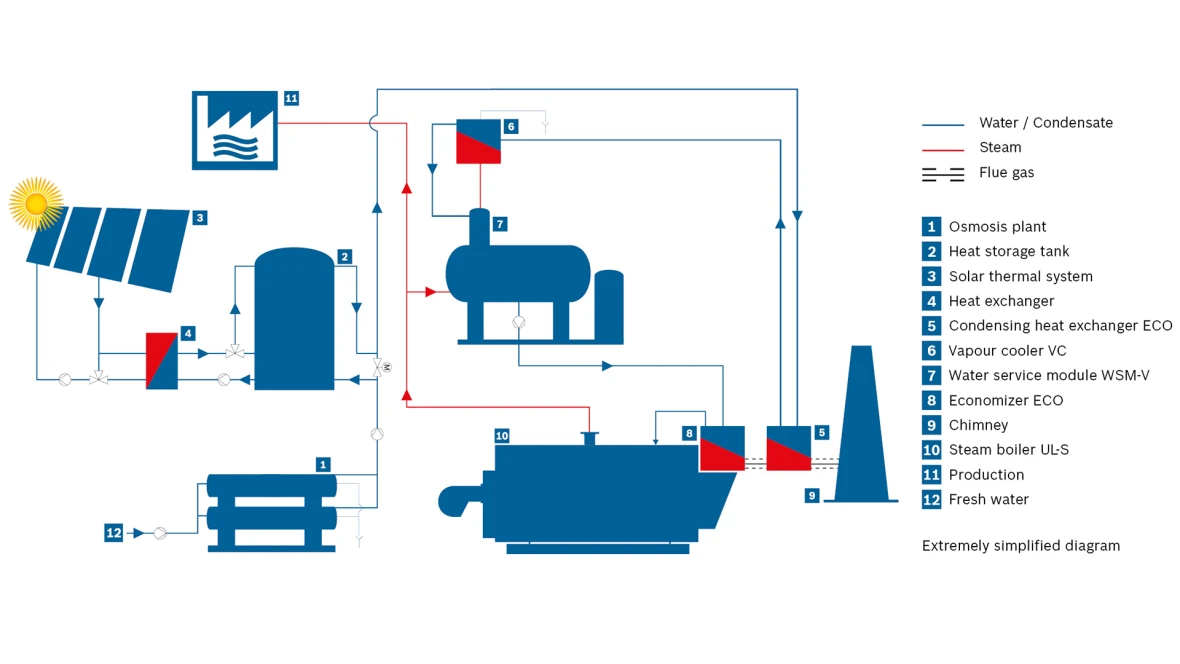
System diagram steam boiler combined with a solar thermal system and heat recovery modules.